


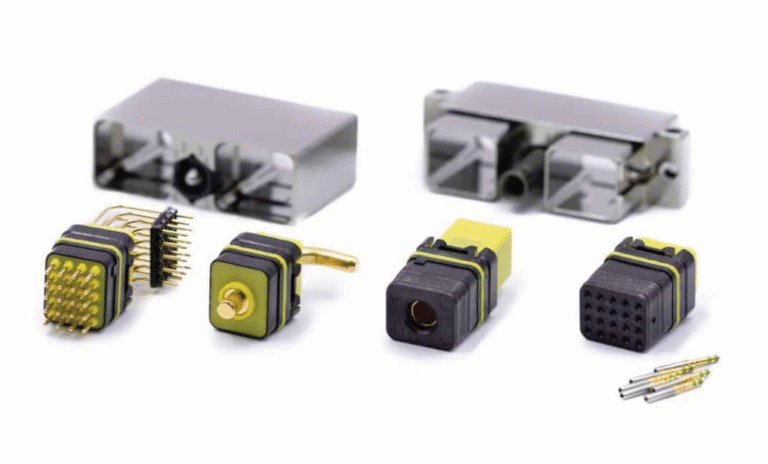
In a demanding industrial landscape like that of the UK, a cable assembly is only ever as strong as its weakest connection. It is therefore crucial for professionals who need to select connectors for industrial equipment – for example, because they are specifying for a new project or upgrading a manufacturing line – to know how to arrive at the soundest choices.
Deciding on unsuitable industrial connectors, after all, can lead to a variety of risks such as connection failures, electrical hazards, and/or non-compliance with regulations. By contrast, getting these choices right can greatly help ensure consistent performance, at the same time as maintaining signal integrity and minimising costly downtime.
Let’s take a look, then, at the fundamental steps that engineers need to undertake when specifying connectors for such industrial applications as sensors, actuators, Ethernet networks, power distribution, and control systems.
We’re particularly aiming this guide at audiences in the UK. Nonetheless, much of this advice will also be applicable in other national jurisdictions.
- Define The Electrical Requirements
To guard against the risk of overheating or system failure, one of the first steps you will have to take in determining the right industrial connector for your application, will be matching the connector’s specifications with your equipment’s power and signal needs.
- Current and voltage: make sure the connector is rated for the maximum continuous current it will carry. In the UK, it is typical for industrial supplies to operate at 230V or 400V AC (50Hz).
- Number of circuits: figure out how many individual wires (contacts) will be needed.
- Wire gauge: it will be crucial for the connector you select to physically accommodate your specific wire size. In this context, remember that while Britain typically uses Standard Wire Gauge (SWG) or cross-sectional area in square millimetres (mm2), international parts may use American Wire Gauge (AWG).
- Assess The Operating Environment
It shouldn’t be a revelation for you to read that industrial environments can often be unforgiving. However, when deciding between industrial connectors, you might still overlook or underestimate the impacts that certain common external stressors can have.
So, make sure you consider such aspects as:
- Ingress Protection (IP) ratings. These ratings are crucial for defining protection against solids and liquids. You should be aware that while, for example, IP44 is suitable for indoor/outdoor use where splashing is possible, an IP67 rating signals dust-tightness and protection against temporary immersion.
- Mechanical stress. Consider whether the connection will be subject to constant vibration, as is common in HVAC equipment and conveyors. If the answer is “yes”, you should be looking at secure locking mechanisms or strain relief to prevent accidental disconnection.
- Chemical resistance. Corrosion can be a major risk in chemical plants or laboratories. For settings like these, it is important to select connectors with reinforced housings made from materials like PBT or stainless steel.
- Decide On the Connector Type and Form Factor
Choosing the right physical shape of connector will also be important; such factors as space constraints and application type will show you the way to go.
Your possibilities here could include the likes of:
- Circular connectors, such as M12 and M8 components. Connectors of this shape are popular on account of their ease of mating and ability to house a variety of voltages. They see frequent use in aerospace or tough industrial settings.
- Rectangular/heavy-duty connectors (HDC). These connectors are highly versatile, with the ability to carry power, signal, and data in a single unit. They are predominantly used for automation purposes.
- Sensor connectors. M8 and M12 threaded connectors are the UK standard for sensors and actuators in automation.
- Ensure Standards and Regulatory Compliance
Again, it is worth reminding you that we are pitching this guide largely at professionals in the UK.
Still, the broader principle of ensuring your chosen industrial connectors adhere to both local and international standards, will be a sound one wherever you undertake your projects.
- IEC/EN 60309: this is the key European and international standard for heavy-duty industrial plugs, sockets, and couplers (often referred to as “pin and sleeve” or “CeeForm” connectors) with a capacity of up to 1000V DC/AC and up to 800A.
- British Standards (BS): keep an eye out for the BS mark, to make sure products are tested for local safety regulations.
Follow Our Guide to Reach the Right Decision Every Time
By systematically going through the aforementioned stages, you can help ensure you only ever choose industrial connectors that deliver high performance and reliability for years, not merely months.
If you’re in any doubt about the optimal choices for your latest application, make sure you consult manufacturer datasheets or speak with a reputable industrial connector specialist. The latter will often be happy to provide free advice, to help ensure you always make the best decision.
